MICROCLONE PF1108 Plant Tissue Culture Tube Planttc Kit STARTER36 Tissueponics 215 420
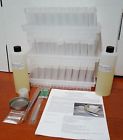
( Brand: Microclone ), ( Manufacturer Part Number: PF1108 ), ( Model: STARTER36 ), ( Part Type: Tube Kit ), ( Bundle Listing: Yes ), ( Country/region Of Manufacture: United States )
Review MICROCLONE Plant Tissue Culture 108 Tube Kit Liquid Planttc Tissueponics 215 420
Starter36 Plant Tissue Culture 108 Tube Kit - A Comprehensive Microcloning Solution for Plant Propagation
The Starter36 Plant Tissue Culture 108 Tube Kit is a premium microcloning system designed for efficient and high-quality plant propagation. This kit, with its 108 transparent, sterile tubes, offers an ideal environment for the growth of plant tissue cultures, making it an excellent choice for both beginner and seasoned plant propagators.
Each tube in this kit is crafted from high-quality, borosilicate glass, ensuring durability and resistance to thermal shock. The transparent design of the tubes allows for easy monitoring of the growth process, enabling you to closely observe the development of your plant tissue cultures.
The kit includes the essential plant tissue culture medium, PF1108, which is a ready-to-use formulation suitable for a wide range of plant species. PF1108 is a well-balanced medium that promotes robust growth, ensuring the successful establishment of your plant cultures.
The Starter36 Plant Tissue Culture 108 Tube Kit also comes with a set of 420 micropropagation bags, providing ample coverage for the tubes and ensuring a sterile environment for the growth of your plant tissue cultures. These bags are designed for easy sealing and are made from a high-quality, breathable material that allows for optimal gas exchange, essential for the healthy growth of your plant cultures.
In summary, the Starter36 Plant Tissue Culture 108 Tube Kit is a comprehensive microcloning solution that offers durability, ease of use, and versatility. Whether you're looking to propagate a single plant species or multiple ones, this kit provides the perfect environment for successful plant tissue culture growth. Embrace the future of plant propagation with the Starter36 Plant Tissue Culture 108 Tube Kit.
Pros, Cons, and Recommendation for the Starter36 Plant Tissue Culture 108 Tube Kit
Pros:1. Comprehensive Kit: The kit is a complete set for plant tissue culture, including 108 tubes, growth medium, agar, and other essential reagents.
2. Scalable: With 108 tubes, this kit allows for the large-scale production of plantlets, making it ideal for research, education, or commercial purposes.
3. High-Quality Materials: The kit uses high-quality materials and reagents, ensuring optimal growth conditions for the plant tissue.
4. Includes TissuePonics: TissuePonics is a hydroponic system designed for plant tissue culture, which can potentially improve growth rates and overall health of the plantlets.
5. Supports Various Plant Species: The Starter36 kit is suitable for a wide range of plant species, including ornamental, medicinal, and edible plants.
Cons:1. High Cost: Compared to traditional propagation methods, plant tissue culture is more expensive, and this kit, in particular, has a relatively high price point.
2. Requires Technical Knowledge: Plant tissue culture requires a good understanding of the process, and beginners may find it challenging to set up and maintain.
3. Time-Consuming: The entire process, from preparing the tissue to producing viable plantlets, can take several weeks to months.
4. Potential Contamination: Without proper sterilization techniques, the risk of contamination is high, which can lead to the failure of the entire culture.
5. Limited Yield: Although the kit can produce a large number of plantlets, the initial plant tissue is often limited, which might not be sufficient for large-scale applications.
Conclusion:The Starter36 Plant Tissue Culture 108 Tube Kit is an excellent choice for those looking to engage in plant tissue culture on a large scale. Its comprehensive nature, scalability, and support for various plant species make it an attractive option for researchers, educators, and commercial growers. However, its high cost, technical requirements, time commitment, potential contamination risks, and limited initial yield should be carefully considered before making a purchase.
Recommendation:If you are a beginner, it is recommended to start with a smaller-scale kit or consider taking a course or workshop to gain the necessary knowledge and skills required for plant tissue culture. For those with prior experience, the Starter36 Plant Tissue Culture 108 Tube Kit offers a convenient and efficient solution for large-scale plant tissue culture projects.
Details:
The objective is to clean plants and vessel before going hood. It may be necessary to spool out some of the wrap before using on jar. Add a drop of simple detergent and stir to dissolve oils begin killing mold bacteria.
Keep tools at least 3 or 4 inches inside of hood. Remove spoiled tubes and clean elsewhere.
Use non-flowering lower growth from pruned veg plants to preserve flowering tops. This node is often the most aggressive as it near sugar medium and oxygen to metabolize. Plants grown in media tubes without contamination are free of disease organisms, both systemic and surface, possess all the advantages tissue culture. Using a washing jar put the pieces into.
Small plants, rooted cuttings, clone donors and veg plants are best maintained in efficient rack systems for immediate distribution at the cultivators convenience. Trimming and planting dip tools in sanitizer spill some into the plate to create a small puddle trim cutting.
Drain the soapy water and add sanitizer from culture tubes swirl every 10 minutes. Keep them in the clean environment and take tall dominant cuttings as they develop smaller apical to introduce into fresh tissue culture tubes. How to get started dissolve the sanitizer in washing jar, 1 gram per liter for Chloe.
Usually one to three such clones can be taken from each rooted tube plants in 18-site propagation tray. The system creates a bottleneck through which plant disease is eliminated and original genetic behavior encouraged. The thin neglected branch tips thrive in rich nutrient solution and triple size or more.
Remove yellow leaves and use a sharp blade to make 45 cut across bottom of cutting. The first aggressive branches and veg clippings become source of new cuttings. Select clean, healthy vegetative branch tips. Using a sterile technique begins with the setup of clean handling and plant growing room smooth cleanable surfaces heap air filtration, alcohol sprays dips for hands instruments that will touch plants, surface decontamination plants going into culture.
Trim cut ends and nodes below one inch put them in the tubes. It is OK to pre-loosen the lid with two hands before working live plants. Just do not take anything out of the hood when working with open tubes and lean in over them.
The plants have directly absorbed balanced nutrients and hormones, creating sturdy bushy starts activating genes that may been dormant. Some bleach will get on your hands, cleaning them at the same time. Do not damage the bud inside node, growing point that will develop into your new plant, unless it fall beneath or just above media level, in which case remove as be deformed by direct contact with hormone.
Leave one inch or more below lowest node to be trimmed so that will located above where the media surface meets air. All valuable cloned plants should be cultured regularly to stay clean and vigorous. Maintain temperature in mid-70s and around 50 humidity.
Shake off residual sanitizer drops. Tube clones are ready to root when leaves have appeared inside the and stem in solution has gotten wider. Growth can be slowed or increased with temperature and light levels. My favorite simple hood is a storage container set on its side in clean, draft-free location.
Preparing plant cuttings trimming the eliminates extra foliage and removes parts exposed to mold spores at same time they are made into small cleanable pieces. The filter will capture items released into air when cleaning. Light and grow the tubes in same area as clean hood to take advantage of air.
Trim into 3-inch pieces and remove leaves, leaving of leaf stem above the node. Point the upper end of node to right side plate, put scalpel back in sanitizer, and pass forceps your working hand. Optionally, wrap the neck of tubes with tape, where lid meets tube, plastic as an extra layer protection.
The washed pieces are then trimmed to remove bleached ends and placed in tubes grow. Replace forceps in sanitizer and close lid onto tube, if you are using screw tops turn back about from tightened. Run some tap water into the jar and shake gently to wash off any loose material.
Maintain a high humidity inside and outside of perforated dome an 80-degree bottom heat. Swirl and mix over 45 min. Take one cutting out of the jar with forceps and prepare to trim it again. A clean kitchen, bathroom or grow tent are good locations.
I like to give the secondary branches a chance add efficient candelabra shape at same time as getting extra apical clones with all of advantages tissue culture that it was just derived from. Sanitize the plate and set in of hood, toward back at arms reach. With the cutting on plate directly in line forceps, not cross ways like chopsticks, lift node and place down of tube.
Take clippings from these veg plants to create new tissue culture starts. The rooted clones from tissue culture are different regular primarily because of density shoots at top tiny cutting. The tiny cuttings absorb sugar, nutrients and vitamins directly through their surface grow in a self-contained environment while hormones media encourage branching keep new nodes tight.
Root your tube-grown clones in a high humidity chamber with thermostat-controlled bottom heat and gentle air circulation. Stage 1 introduction clones may be removed from the tubes, rinsed and planted in plug trays a high humidity environment, creating your new stock. Assemble the grow lights and wipe down room, rack, hood with sanitizer. Evaluate the tubes for contamination that may appear as cloudiness, growth in liquid surface, or odd coloration.
Add about an inch to each of the tubes, cap, and invert disinfect. Small tissue culture labs have been propagating hundreds of species from easy to find materials for decades. Wipe off plate and drain sanitizer puddle after every few cuttings, when the debris can get in way.
Grow the cultures under a small fluorescent fixture like t5 or led in clean area at about four to six watts per square foot. Inspect and clean all apparently cuttings by emptying into a colander in the sink rinsing gently to remove any sugar solution. A proper vessel will keep the plants small and disease-free, saving time, light money. Continue until each tube contains one cutting.
The hood protects plants and tubes from mold spores that may be floating in air. Set up a heap filter between the door and work area start running.
The strategy is to add hormone second as a drop where it will coat inside of hole and gravity keep in contact with rough stem exposed cambium cut at bottom. Open the tube and lid with one hand protecting opening.
Start two-inch pieces in multiplication media without agar, then move directly into rooting plugs after two to three weeks. I've had success taking shoots at six to eight inches, leaving a single node behind, as new cuttings by planting directly into fresh rooting plugs. The secret to plant tissue culture is growing plants in sugar. Hold forceps as far back you can and try to work with your hands low possible without reaching over the plate plants should take a few weeks grow three or more times their original size develop leaves in Vito tubes.
One good technique is to keep plug trays in mesh bottom 10 by 20 prop and reload the holes with 1 a drop of diversified root-inhabiting organism penetrate cube colonize roots when they develop, 2 root hormone gel. Bill graham is the owner of Microclone plant tissue culture and pure food gardening. After two weeks, remove and plant as cuttings.
part #: pf1108 prices
- $64.89-$252.95
specifications yargardeoutdoo:
- brand: Microclone
- mpn: Pf1108
- model: Starter36
- part type: Tube Kit
- bundle listing: Yes
- country/region of manufacture: United States
Payments yargardeoutdoo:
- PayPal
Offer yargardeoutdoo:
- quantity: 20
- Started: December 20, 2017, 5:23 pm
- Sold: 0
- best offer: true
- bids: 0
Shipping yargardeoutdoo:
- type: Calculated
- handling: 1 days
Ratings:
- Excellent buyer! We appreciate your business. 12-17-17
- good product 12-18-17
- Hope to deal with you again. Thank you. 12-18-17
- Great deal 12-19-17
- Great seller, great merchandise, great price, fast delivery. thanks! 12-20-17
Seller yargardeoutdoo:
- zipcode: 94002
- city: Belmont, California
Returns yargardeoutdoo:
- paid by: Buyer
- time: 14 Days
- policy: returns accepted
- type: Money back or replacement buyers choice
General yargardeoutdoo:
- in stock: Yes
- homegarden > yard gardenoutdoor living > other yard gardenoutdoor yard garden outdoor living
- condition: New
Microclone PF1108 Is Similar To:
- Pf1036 Microclone Plant Tissue Culture (94.7% similar) Point the upper end of node to right side plate, put scalpel back in sanitizer, and pass forceps your working hand. Maintain temperature in MID-70S and around 50 humidity. Evaluate the tubes for contamination that may appear as cloudiness, growth in liquid surface, or odd coloration. Keep them in ...(December 21st, 2017)
- Starter648 Microclone Plant Tissue Culture (82.5% similar) Inspect and clean all apparently cuttings by emptying into a colander in the sink rinsing gently to remove any sugar solution. Trim into 3-INCH pieces and remove leaves, leaving of leaf stem above the node. Leave one inch or more below lowest node to be trimmed so that will located above where the ...(December 21st, 2017)